 Skip to content
Most teams agree on one thing: timing is everything in sales.
Identifying the exact moment when a prospect moves from casual research to an actively buying approach is crucial to understanding demand generation.
Today’s B2B buyers conduct extensive independent research long before engaging or speaking with a sales team. By the time a vendor conversation begins, decision-makers have already explored industry insights, compared solutions, read analyst reports, and evaluated potential solutions.
Each of these digital interactions leaves behind a valuable digital footprint revealing genuine buying intent.
This shift has forced marketing leaders to rethink how they identify opportunities and prioritize accounts based on the hidden activity.
Here’s where buyer intent data has emerged as one of the most powerful tools for solving this challenge.
For modern revenue leaders, intent data offers a powerful advantage that lies in recognizing the intent signals from content consumption to topic research, that reveals an early indication of genuine buying intent.
These B2B intent signals when captured and interpreted correctly using first-party, consent-based data strategies, intent signals enable organizations to identify real buying interest earlier and engage decision-makers at the right moment by focusing on accounts that are actively researching the solutions and are showing signs of purchase.
This allows marketing and sales teams to prioritize opportunities, align outreach, and accelerate revenue accordingly.
In this blog, let’s explore how B2B leaders transform buyer intent signals into measurable revenue outcomes and how organizations can use intent intelligence to accelerate pipeline growth.
Why Many B2B Marketing Teams Struggle to Identify Real Buying Signals
Many B2B marketing teams struggle to identify true buying signals despite generating a large volume of marketing activity. The marketers rely mostly on the traditional metrics such as: clicks, website visits, content downloads, ad impressions, and click-through rates often measure engagement activity, not actual purchase intent.
While these industry provides visibility into audience behavior, they rarely reveal which accounts are actively evaluating a solution.
As a result, organizations frequently face major challenges such as:
- High volume of vanity signals that leads to misinterpretion of learning and low-quality intent signals.
- Fragmented data and technology silos cause inefficiencies, higher security risks, and poor decision-making due to inconsistent or siloed data.
- Delayed action and data decay result in waste in the budget and longer sales cycles.
- Unclear buying stage where the buyers can’t be predicted in which journey they are.
- Resource misallocation which often focuses on accounts with low purchase likelihood.
Without accurate intent data, revenue teams often prioritize the wrong accounts that doesn’t even align with ICP, that results in longer sales cycles, wasted marketing spend, and missed revenue opportunities.
This is where buyer intent data changes the equation. By identifying real research behavior across the buying journey, intent data helps organizations to focus on accounts actively exploring solutions.
What Is Buyer Intent Data in B2B Marketing?
Buyer intent data is the information or the indication signals that you get when the buyer is genuinely interested and is actively researching solutions within a specific market category.
These intent signals are generated through a variety of digital interactions, including:
- Website visits
- Topic search
- Content consumption
- Vendor comparison
- Event participation
- Content asset download
- Engaging with marketing assets
- Pricing check and comparison
Collectively, these behavioral signals help you reveal where a potential buyer is within their purchasing journey and determine a prospect’s preferences about the solution helping you enhance your lead generation process.
Instead of relying on assumptions, marketing and sales teams gain visibility into real buyer research activity, enabling them to identify opportunities earlier and engage accounts more effectively.
According to research from Gartner, 75 % of the B2B buyers prefers rep free sales experience, choosing to conduct their own research before speaking vendors
Intent data allows organizations to understand and respond to that independent research behavior.
Why Many B2B Marketing Teams Struggle to Identify Real Buying Signals
Despite the growing availability of buying intent data, many organizations fail to translate insights into pipeline impact.
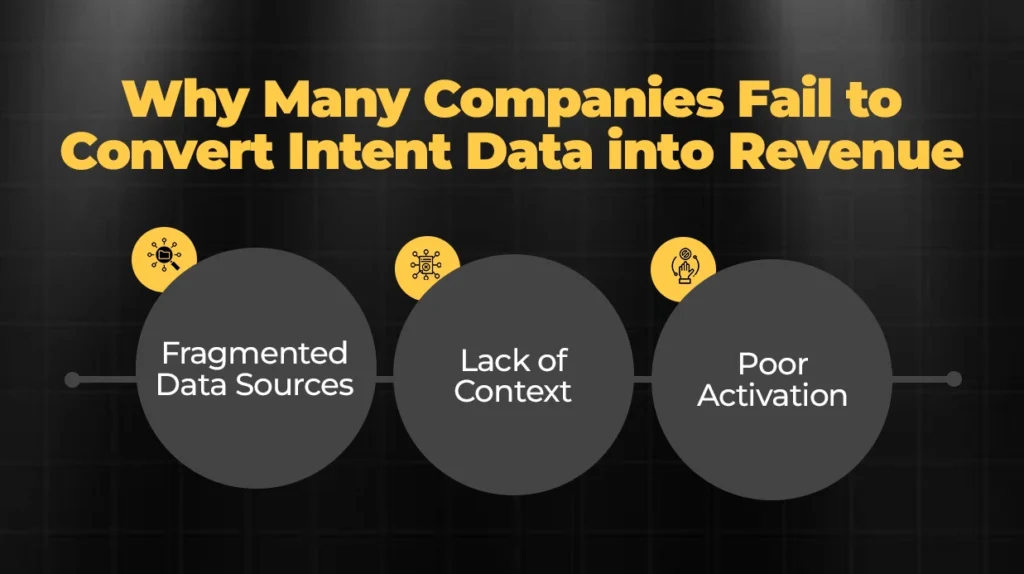
Three common challenges limit effectiveness.
- Fragmented Data Sources
Intent signals often exist across multiple platforms, web analytics, content syndication networks, event systems, and third-party data providers.
Without unified visibility, valuable signals remain disconnected.
- Lack of Context
Not every signal indicates immediate buying readiness.
A single content interaction may represent curiosity rather than purchase intent.
Effective programs evaluate intent trends over time, not isolated actions.
- Poor Activation Strategies
Intent data is powerful source only when it triggers targeted engagement strategies, like personalized outreach, customized content delivery, and coordinated marketing campaigns.
Without activation frameworks, intent data remains unused intelligence.
How B2B Leaders Use Intent Data to Identify Buying Opportunities?
High-performing revenue teams rarely rely on one signal: buyer-intent signal.
They combine first-party and third-party signals to identify and prioritize accounts actively searching for the solutions similar to yours. By analyzing the spikes in the behavioral engagement and revealing the genuine purchasing insights helps you to move from reactive to proactive signal-led engagement.
B2B leaders use intent data collected from two primary sources: First-Party Intent Data and Third-Party Intent Data
- Where first-party data is the behavioral data which is directly collected from your website including, website visits, content downloads, and event participation. This data is more accurate as it reflects 1:1 interaction with your brand, providing high confidence insights because it reflects direct engagement.
- Third-party intent data is sourced from the external publisher networks, review sites, and content syndication platforms, which expands visibility beyond your owned channels and helps identify accounts researching solutions across the broader website.
This intent data signals help you analyze multiple layers of intent signals to determine where an account is within the buying journey.
Quick Read: B2B Data Explained: What Every Revenue and Marketing Leader Needs to Know
Common indicators of B2B buyer intent data include:
- Content Consumption patterns with specific topic search and interaction often reveal early-stage research behavior.
- Topic-level research across third-party platforms
- Engaging buyers with educational content assets help you provide deeper insight into problem awareness and vendor evaluation stage.
- Event participation signals that register for industry webinars and virtual events to a solution category that demonstrate active problem exploration,
Combining these signals allows revenue teams to identify real buyers and distinguish casual interest from serious buying research.
How Intent Data Accelerates Demand Generation and Pipeline Growth?
Companies use intent data to generate leads and pipeline by identifying in-market buyers and deliver personalized outreach before competitors. As intent data is more powerful when its integrated into intent-driven demand generation strategy it generates qualified in-market buyers and pipeline growth.
Here’s how high performing B2B organizations use intent signals to generate leads and pipeline:
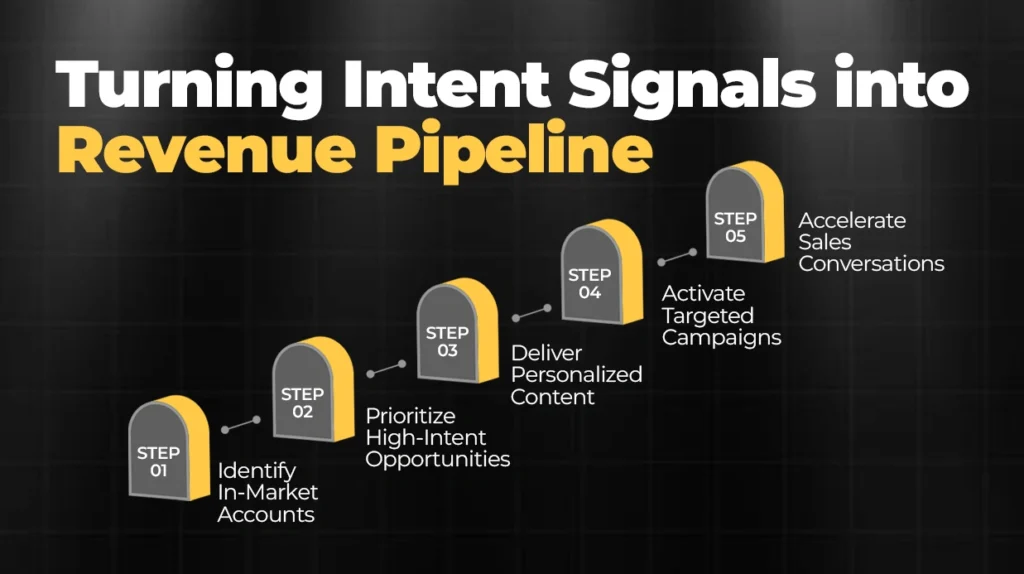
- Identifying And Prioritizing High-Potential Accounts
Companies rely blindly on intent signals as it reveal meaningful buyer research patterns which allow teams to identify accounts actively researching about your solutions. This helps marketing and sales teams to focus outreach on high-probability opportunities, align content with buyer interest, and accelerate sales engagement timing.
This account prioritization is particularly more valuable in account-based marketing (ABM) intent data programs.
- Delivering Personalized Content Experiences
Intent signals reveal buyers behavioral insights as it indicates what buyers care about most, and marketers personalize the content, ads, and outreach based on the particular insights. This results in enhancing the engagement and building credibility with decision-makers.
- Activating Targeted Advertising Through Intent Signals
Intent data helps strengthen digital advertising programs, by aligning the ad campaigns with buyer research patterns and deliver timely relevant messaging to in-market accounts. This approach helps marketers to reach the right accounts that are most likely to convert.
- Shortening Sales Cycles
Relying on the buyer intent signals helps to detect the interest and buying signals early, sales teams can engage with the genuine interested accounts that are more receptive which reduces the time to close deals.
According to Forrester research, over 85% of the companies using intent data have achieved business benefits that resulted in increased response rates.
Why Intent-Based Marketing Improves Conversion Rates
Intent based marketing is the approach that improves outcome by relying and using the behavioral data to target the users with higher purchasing intent, instead of broadcasting campaigns broadly.
B2B marketers hers focuses on the accounts showing real interest and personalize the messages exactly aligning with the buyer’s preferences this helps in reducing wasted ad spend, enhance faster sales cycles, better marketing ROI, and aligns marketing and sales teams with immediate customer needs.
These signals help B2B organizations worldwide compete in complex buying environments and help transform data into revenue intelligence.
The Strategic Value of First-Party Intent Data
First-party data is highly accurate and privacy-compliant data based on the buyer’s behavior and which is based on direct interaction of buyers with the content assets and the marketer’s organizational website.
The data is highly reliable as it reflects real engagement with your organization and provides several advantages like:
- Higher accuracy
- Stronger sales alignment
- Better account prioritization
This data is highly reliable and provides clearer insight into buyer interests and when building their demand strategy around first-party data signals consistently it reflects real engagement with your organization generating a higher-quality pipeline.
At Vereigen Media, a leading demand generation company helps you to design, and capture verified first-party engagement signals through human-verified interactions and privacy-compliant frameworks.
Through proven solutions such as:
- Verified Content Engagement a Content Syndication Solution
- VM Engage a Display and Programmatic Advertising Service
- Event Registration Campaigns
- Account Based Marketing Initiatives
- Demand Generation Programs
brands can reach the decision-makers aligning with the ICP while capturing meaningful engagement signals that strengthen intent intelligence.
Why Buyer Intent Data Is Essential for Modern B2B Revenue Teams
With the evolving marketing landscape, B2B buyers have shifted their buying approach by involving multiple decision-makers who are researching solutions related to their challenges.
Where intent data is crucial which help you understand demand and help organizations engage during this critical research phase.
Organizations that use b2B intent data effectively gain visibility into buyer behavior long before competitors recognize the opportunity.
The several strategic advantages include:
- Earlier visibility into emerging opportunities
- Improved account prioritization
- Build stronger and relevant buyer conversations
- Improve pipeline growth with higher marketing ROI
Organizations that leverage b2b intent data effectively gain visibility into buyer behavior long before competitors recognize the opportunity.
For marketing and sales leaders responsible for revenue growth, intent intelligence provides a strategic advantage in competitive markets.
Turning B2B Intent Signals Into Revenue Outcomes
Modern B2B buyers leave intent signal- footprints across every stage of their digital research journey, from content engagement to vendor comparisons creates valuable intent signals that reveal emerging opportunities.
Organizations that recognize and interpret those intent insights from B2B buyers, gain a significant competitive advantage. They engage buyers earlier, prioritize the right accounts, and align marketing and sales around real demand.
Buyers intent data has now become a strategic revenue intelligence capability for modern B2B organizations. For revenue leaders focused on accelerating pipeline growth, the ability to turn intent signals into actionable engagement may be one of the most powerful advantages in today’s competitive markets.
At Vereigen Media, we help organizations capture verified engagement signals through first-party data, human verification, and privacy-compliant demand generation programs.
Ready to turn buyer intent signals into a qualified pipeline?
Book your free strategy session with Vereigen Media now and see how we help translate engagement signals into a qualified pipeline.
Leads. Done Right.
Frequently Asked Questions About Buyer Intent Data
Buyer intent data is the behavioral information of a company or individual researching the solutions related to a specific product or service category. These signals are crucial and help the marketing and sales teams identify potential buyers actively evaluating solutions.
Organizations collect B2B buyer intent data through multiple channels or sources such as: First-party engagement data Content downloads and webinar participation Third-party research and monitoring platforms Website analytics and engagement signals Content engagement tracking Event participation Combining these sources provides you with a clear view of buyer interest.
First-party intent data is genuine and accurate data that comes directly from the interactions done by your brands or interested customers, which involves website visits or content engagement. Third-party intent data is collected from external publisher networks that monitor topic-level engagement across thousands of websites. First-party data reflects direct engagement, while third-party data is outsourced and expands market-wide visibility.
Not all the intent signals are actionable and crucial to proceed with any marketing campaign. The most actionable intent signals are the one which shows clear insights of: pricing page visits, demo requests, competitor research, and deep content consumption like BOFU content assets. The intent data are supposed to be acted upon in a week, as it has 1/2 life that is measured in days, not months.
Intent-based marketing is essential in the evolving marketing landscape of demand generation as it help companies to focus on the genuine and active accounts that are researching about your competitors or the solutions similar to yours. This intent-based marketing approach uses behavioral signals to target buyers actively researching solutions resulting in higher quality leads, increase campaign efficiency, increase conversion rates, and better ROI.
Vereigen Media, a U.S.-based leading demand generation company uses intent data to improve lead quality by using first-party data, human verification with its proven solutions like Verified Content Engagement and VM Engage. This approach ensures that outreach targets real in market decision-makers that have confirmed interest in relevant content. At Vereigen Media we help clients worldwide reach accounts at peak buying moments reducing wasted spend and improving pipeline conversion.
Written By –
