 Skip to content
In modern B2B marketing, personalization leads to genuine engagement, and it’s the starting point for the measurable impact.
B2B buyers don’t need new marketing tactics or tools, they are expecting a marketing approach that understands them. And such understanding is what leads to the genuine engagement that fills the pipeline growth.
In today’s digital-first buying environment, decision-makers expect to understand their industry, its challenges, and priorities before the first sales conversation begins.
Generic outreach, mass email campaigns, or broad messaging designed for large audience groups no longer resonate with today’s sophisticated B2B audiences.
Instead, the buyers are rewarding the organizations that deliver:
- Contextual insights
- Relavant expertise
- Personalized experiences
This shift has fundamentally changed how companies generate demand, build relationships, and win business.
The shift has made today’s buyers to research solutions independently, explore vendor content, evaluate industry perspectives, and compare providers long before engaging with a sales team.
When the experience feels generic, engagement disappears quickly.
But when marketing feels relevant reflecting real buyer intent and context, real conversation starts begin building trust.
This is why personalization has become one of the most powerful strategies in modern demand generation.
In this blog, we’ll explore how B2B personalization is reshaping modern buyer expectations, why modern executives are expecting personalized experiences, how personalization is driving measurable business growth, and how organizations can implement effective personalization strategies for stronger engagement and better pipeline outcomes.
What Is B2B Personalization and Why Does It Matter for Modern Buyer Experience?
B2B personalization is an approach of tailoring marketing messages, content experiences, communications, and digital interactions based on specific attributes of a business audience aligning to your ICP.
Rather than broadcasting one generic message to broad audiences, personalization adapts messaging based on the factors such as:
- Industry sector
- Company size, revenue, and maturity.
- Job role within the organization
- Buying stage
- Business challenges or strategic priorities.
The goal is simple and powerful: Deliver the right message to the right decision-maker at the right time.
Unlike B2C personalization, B2B decisions typically involve complex research processes and multiple-stakeholders evaluating different perspectives operating at an organizational level.
Key components of B2B marketing personalization includes:
- Industry-specific content for executives, practitioners, and technical leaders.
- Personalized landing pages and website experiences
- Industry focused content aligned to market realities.
- Account-level campaign targeting
- Personalized digital journey consideration across websites and other content platforms.
- Data-driven dynamic targeting messages based on behavioral engagement.
The goal is straightforward: Deliver the personalized message to the right decision-makers at the right time.
According to Salesforce, 92% of B2B marketers believe their prospects are expecting a personalized experience.
Personalization here strengthens the buyer experience in many ways, as compared to consumer personalization.
- Longer buying cycles: B2B buyers conduct deeper research before making decisions.
- Multiple stakeholders: Receive information aligned with their priorities.
- Higher deal value: Trust and relevance play a key role in conversion.
Because of these factors, relevance becomes a powerful differentiator.
Organization that master this approach directly address their concerns, helping them to create stronger engagement, deeper trust, and faster buying decisions while evaluating solutions more efficiently improving customer relationships.
Why Modern B2B Buyers Expect Personalized Experiences?
Over the past decade, the B2B buying process has been evolved dramatically, and here’s why B2b buyers have shifted their purchasing approach from generic to personalization. Buyers are more informed, more independent, and more selective about the vendors they engage with.
Today’s decision-makers often completes around 60-70% of their research before connecting with the sales person.
The buyers explore:
- Industry report
- Vendor website
- Product documentation
- Peer recommendations
- Analyst insights
This perspective shift in personalization often connects to real business needs.
Modern buyers now expect vendors to deliver:
- Industry relevant messaging
- Job role based insights
- Seamless digital experiences
- Value driven thought leadership for real business challenges
With this demographic shifts are also accelerating the trend with other several factors.
According to Forrester, 71% of Millennials and Gen Z, generations that expect digital interactions to be personalized, intuitive, and relevant.
From a buyer perspective, personalization delivers clear value such as:
- Faster access to relevant insights
- Content aligned with industry challenges
- Reduced research time
- Efficient demand generation
- Solutions mapped to real business needs
This is why B2B personalization has become a crucial strategy which help improve buyer experience.
Personalization signals something critical, stating the vendor understands my business.
Quick Read: Personalization at Scale: The Future of Account-Based Marketing Success
The Strategic Role of Personalization in B2B Marketing
Personalization in B2B marketing help you replaces generic outreach with personalized one. Organizations are adopting personalization effectively to see improvements across the entire funnel.
The key business outcomes include:
- Driving higher engagement and conversion
- Building trust and credibility
- Improved buyer experience
- Stronger customer retention
- Better alignment between marketing and sales
For organizations focused on pipeline growth, personalization has become essential.
How B2B Website Personalization Turns Your Website into a Conversion Engine
As your website is the gateway for decision-makers to evaluate your organization. B2B website personalization is one of the most powerful tools for improving engagement with the buyers first impression.
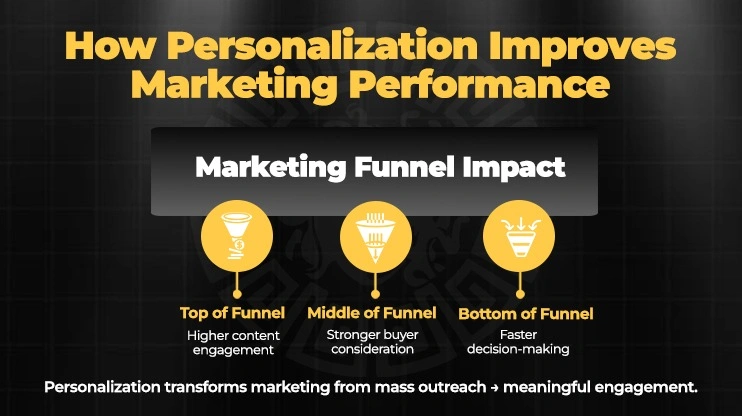
B2B website personalization adapts messaging based on visitor attributes and transform static environment into a dynamic engagement platform.
The visitor attributes are as follows:
- Industry segment
- Company size
- Geographic region
- Previous content engagement
- Buying journey
Instead of presenting same generic content to every visitor, companies deliver personalized content to the targeted audience that resonate immediately.
Examples of effective website personalization include:
- Industry-specific case studies and landing pages
- Role-based messaging for executives, senior leaders, and practitioners
- Content recommendations aligning with their previous engagement
- Personalized CTAs aligned with buyer intent
When a website personalization is recognized and carried out correctly, it increases engagement significantly.
How Companies Implement Personalization in B2B Marketing Campaigns
Most of the companies assume that the personalization implementation requires advanced technology or massive data sets.
But in reality, companies implement personalization in B2B marketing campaigns by using data analytics, strategic segmentation, and thoughtful personalized message.
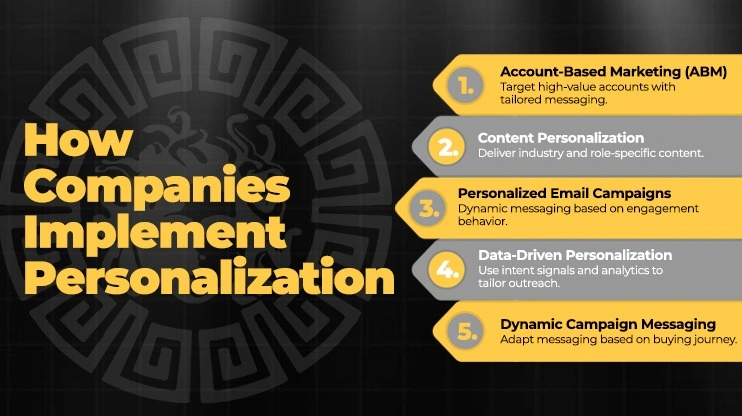
To implement personalization strategies in B2B marketing campaigns you should focus on:
- Content Personalization
- Email Personalization
- Data-driven personalization
- Dynamic email marketing
At Vereigen Media, the proven solutions like Verified Content Engagement (Content Syndication), VM Engage (Display and Programmatic Advertising), and Event Registration help organizations deliver highly targeted engagement experiences to the right decision-makers across multiple channels.
The Data Foundation Behind Effective B2B Personalization
Personalization is the strategy which succeed only when built on reliable, robust, and unified data foundation.
As 71% of companies are expecting to be delivered personalized experiences. (Source: McKinsey)
Yet many of the organizations are struggling with data silos.
Successful data foundation strategies rely on:
- High-quality first-party consented data
- Human validation
- Accurate audience targeting
- Behavioral signals
- Zero outsourcing
Organizations that prioritize the above data are better positioned to create a meaningful buyer experience, which effectively performs well in B2B personalization.
The Future of Personalization in B2B Marketing
The future of personalization has already taken pace where it has been shifted from broad targeting to hyperpersonalized individual targeting. Where you can see deeper data insights and smarter engagement strategies.
With the above foundational futuristic strategies here are several other trends that are shaping the future of B2B personalization for B2B marketing.
- AI-assisted personalization to dominate by analyzing engagement patterns through a vast database.
- Account-level experiences
- Hyper individual personalization
- Multi-channel personalization
- GenAI personalization
Organizations that are investing in these capabilities will position themselves ahead of their competitors tomorrow for the measurable impact.
Personalization Builds Stronger B2B Relationships
B2B buyers no longer respond to broad targeting or generic marketing experiences. They expect vendors to understand their business challenges before the first conversation and deliver insights that reflect their priorities.
Organizations that adopt this personalization approach create more relevant buyer experiences, stronger engagement, and better conversion outcomes.
This approach is now reshaping the marketing strategy.
At Vereigen Media, our approach focuses to help organizations connect with real decision-makers through verified content engagement while relying on first-party data and human verification that improves campaign performance and delivers more relevant buyer experiences as expected by the modern B2B buyers.
Ready to achieve measurable pipeline growth with personalization?
Book your free strategy session with Vereigen Media today and discover how verified engagement helps you reach the right buyers at the right time.
Leads. Done Right.
Frequently Asked Questions on B2B Personalization.
B2B personalization in marketing involves customizing marketing experiences based on audiences attributes such as company’s industry, job role, business needs, and buying stage. This helps you improve relevance and overall buyer experience.
Personalization is crucial in B2B marketing today, this helps you to deliver relevant content to decision-makers by understanding their specific business challenges. This personalized approach improves engagement, trust, and conversion rates.
Companies can implement personalization in B2B marketing campaigns by using firmographics, audience segmentation, account-based marketing campaigns, and data-driven content strategies.
Vereigen Media, a U.S.-based demand generation company helps organization worldwide reach verified audiences using first-party data and verified engagement models such as Verified Content Engagement (Content Syndication) and VM Engage (Display and Programmatic Ads) enabling brands to connect with real decision makers for more effective personalized marketing campaigns.
Effective B2B marketing personalization requires reliable first-party data, technographic data, firmographic data, behavioral intent signals, and accurate contact data to create personalized experiences and ensure messaging reaches the right decision-makers.
Written By –
